
 EN
EN  Deutsch
 Español
Why Rummy Tile Game can become a new generation of classic board game
Introduction: The charm of board games and the rise of Rummy Tile Game Historical background of traditional board games Board games, as part of human...

Ask ten people where they learned to play dominoes and you will probably get ten different answers. A grandmother's kitchen table, a rainy week at summer camp, a long evening in Havana. Almost nobody says they read the directions. Yet written directions are exactly what a game-night host needs when four new players sit down at once, what a teacher needs for a quiet classroom activity, and what a buyer needs when checking that a printed rule sheet actually matches the tiles inside the box.
This guide covers the standard domino directions from start to finish: what belongs on the table, how to set up, how a turn works, how points are scored, and which variations change the rules. It is written from the perspective of people who have been making dominoes in Ningbo since 2008, so we will also mention the small differences in tile quality that players notice within the first hour of play.
The classic starting point is a double-six set: 28 tiles, each one carrying two ends numbered from blank to six. That is the set every standard rulebook assumes, and it is enough for two to four players. Bigger sets work in exactly the same way, they simply carry more numbers and more tiles, which helps when six or eight people want to play at one table.
The number of tiles is not arbitrary. A double-six set contains one unique tile for every pair of values from zero through six, doubles included, which comes to 28. A double-nine set holds 55 tiles, and a double-twelve set holds 91. That is the real reason larger sets need more elbow room on the table.
| Set | Tiles | Where It Usually Appears |
|---|---|---|
| Double 6 | 28 | Standard block and draw games for two to four players |
| Double 9 | 55 | Cuban dominoes and games with five or six players |
| Double 12 | 91 | Mexican Train and other train-style games |
| Double 15 | 136 | Large party play and big family gatherings |
| Double 18 | 190 | Tournament, club, and collector sets |
Beyond the tiles themselves you need a flat surface wide enough for a line that can stretch well over a metre, plus a pen and paper for keeping score. If you plan to play the draw game, leave a clear patch beside the boneyard for the tiles you pull.
For a first set that will survive years of family use, a classic double-six in a sturdy ivory paper box is the version we make most often for beginners.
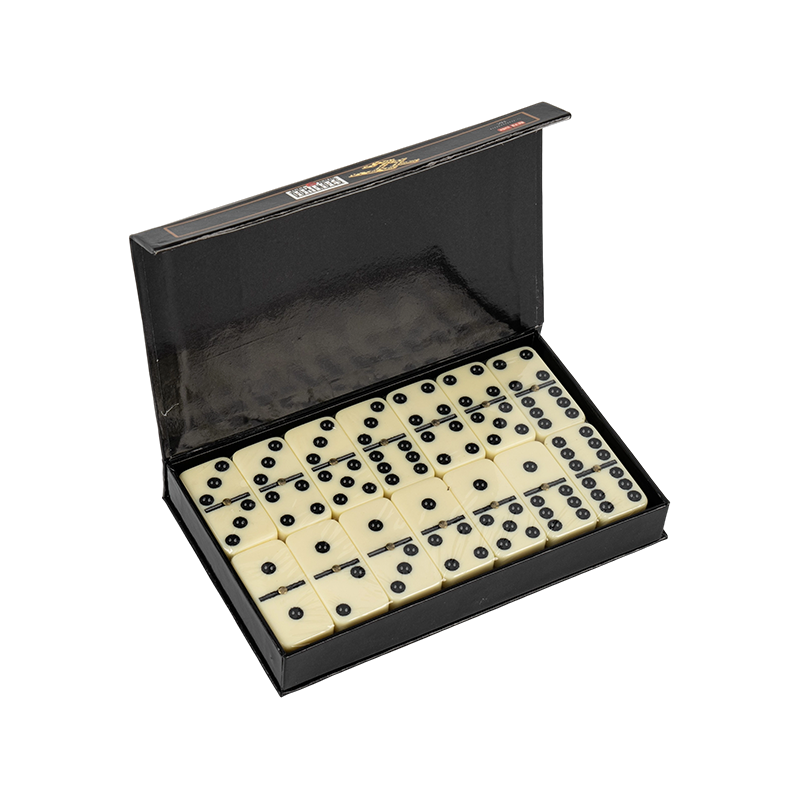 Classic Double Six Dominoes in Ivory Paper BoxA beginner-friendly classic double-six set in an ivory paper box, with customization options for a durable first family domino set.View Product →
Setup is simple, but two habits make the difference between a smooth game and one where somebody spots a tile they should not have seen.
Some families deal seven tiles to everyone regardless of how many are playing and simply play without a boneyard. That works perfectly well, but it turns every round into a blocking game, which is a noticeably different experience.
Once the hands are dealt, the round follows a fixed rhythm that rarely changes from table to table.
Those six steps cover the vast majority of games you will ever sit in on. If you want to go deeper into double-six play, including the thinking behind holding a six back or deliberately forcing a block, we keep a fuller walkthrough of double-six rules and strategies on the site.
One detail worth mentioning: a double that has been played can usually still be added to later, as long as the numbers match. New players often assume a double closes the line. It does not.
Scoring is where regional differences show up most, so agree on a method before the first tile falls.
A useful habit for beginners is to count pips at the end of each round out loud. It takes thirty seconds, it prevents quiet disagreements, and after a few evenings you will start estimating your opponents' hands from the tiles they choose to play.
Mexican Train is played with a double-twelve set and a small hub that holds the opening tile. Each player builds a personal train outward from the hub, and anyone who cannot play draws a tile and marks their train with a small token, which lets other players add to that line until the mark is cleared. There is also a shared public train that everyone can use. A double-twelve set of 91 tiles is the standard requirement, and the aluminium-box version we build is put together with exactly this style of long, branching play in mind.
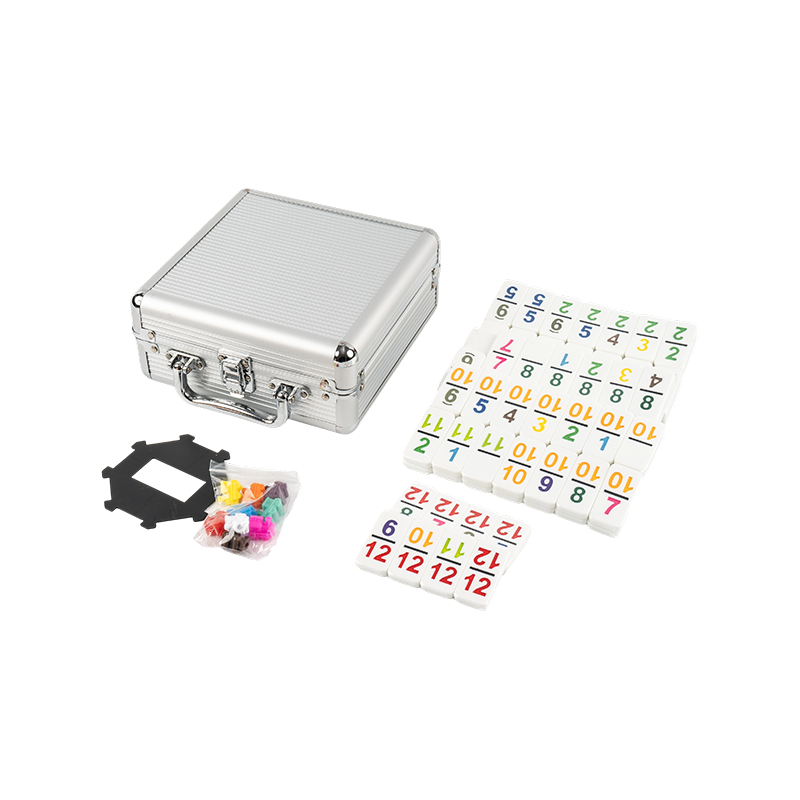 Double Twelve Aluminum Box Mexican Train DominoesA double-twelve Mexican Train set in an aluminum box, suited to long, branching Mexican Train play and available with customization.View Product →
Cuban dominoes is a four-player, partner game played with a double-nine set. The rules sit closer to a trick-taking card game than to the block game most people grew up with: partners sit opposite each other, the play has a tight rhythm of its own, and experienced players keep a running count of what has already fallen. You need a double-nine set of 55 tiles, and wooden boxes remain the traditional way to store one.
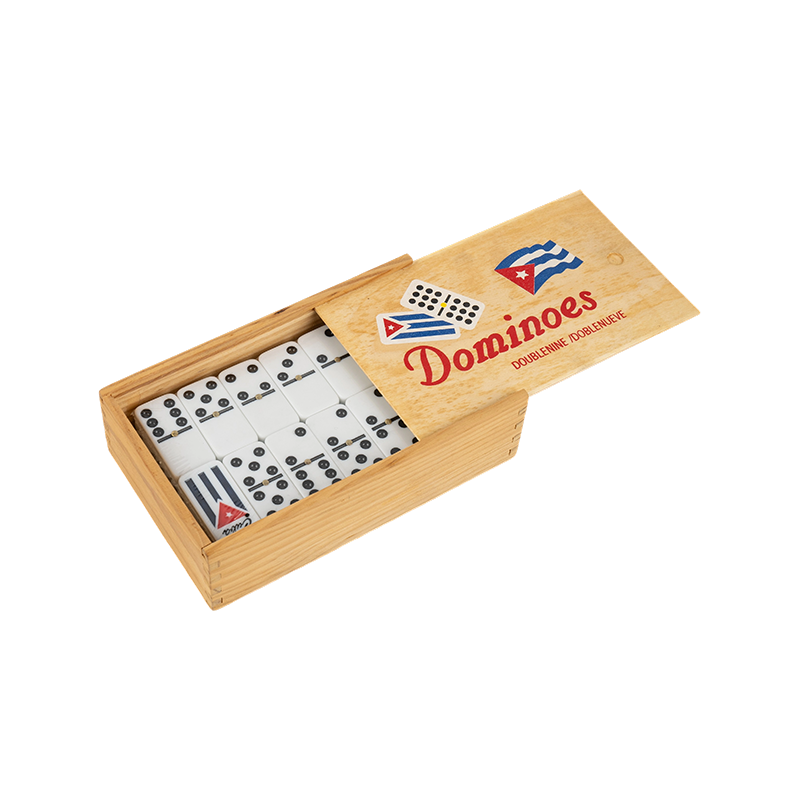 Traditional Cuban Double Nine Wooden Box DominoesA traditional Cuban double-nine set in a wooden box, suited to partner play and the 55-tile format, with customization available.View Product →
If you only remember one distinction, remember this one. Block dominoes forbid drawing, so if you cannot play you pass, and rounds often end blocked. Draw dominoes let you pull from the boneyard, which keeps the line moving and usually produces an outright winner instead of a stalemate. All Fives adds scoring on multiples of five during the round. Chickenfoot is another popular format in which a double opens a new branch of the line that players must match with specific numbers.
We have been moulding urea dominoes in Ningbo since 2008 with a team of more than a hundred people, and the same question comes up from buyers in every market: what actually separates a good set from a cheap one? Three things, mostly.
We run our own moulds for double-six through double-eighteen sets, and our production line has been making dominoes for more than ten years. Safety and environmental compliance are part of the brief on every order, and custom faces, printed designs, and branded packaging are all possible, which matters if you plan to sell a set under your own name.
If you are putting together a game-night set, sourcing for a shop, or ordering promotional dominoes with your own design on them, we are glad to talk through sizes, packaging, and quantities. The directions above have hardly changed in a century. The tiles have, and that is the part we enjoy.

Mainly engaged in the manufacture and processing of dominoes and their matching dice and plastic products.
Phone:+86-189-5820-5377
Email: [email protected]
TEL:+86-574-8873-4255
Adress: Jindi Village, Jinjiayuan, Jinhu Town, Fenghua City, Ningbo, Zhejiang, China
