
 EN
 Deutsch
 Español
Why Rummy Tile Game can become a new generation of classic board game
Introduction: The charm of board games and the rise of Rummy Tile Game Historical background of traditional board games Board games, as part of human...

Dominoes look simple: a handful of tiles, a table, and a few friends. Then someone asks whether doubles go crosswise, whether you must draw, and how scoring works, and the friendly game suddenly has three sets of rules. That is normal. The rules of play for dominoes are not one fixed code; they are a family of closely related games. The good news is that most versions share the same skeleton. Once you know that skeleton, you can sit down almost anywhere and follow the local custom after a minute of agreement.
We have been making dominoes in Ningbo since 2008, and the questions we hear from customers are often the same ones asked at a kitchen table: which set should we use, how many tiles do we deal, and who starts? This guide walks through the common rules in plain language, with notes on where house rules usually differ.
For a first game, a Double-6 set is the easiest place to begin. It has 28 tiles, enough for a small group without making the table feel crowded. Larger sets open up longer games and regional styles, but they also need a little more space and a clear agreement about hand size. Shuffle the tiles face down, then deal the opening hands. In many casual games, two players take seven tiles each and three or four players take five each. Some groups deal seven to four players and leave no boneyard at all, so settle this before the first tile is turned.
| Set | Tiles | Typical use | What to agree |
|---|---|---|---|
| Double-6 | 28 | Family games and first lessons | Deal 5 to 7 tiles; decide whether draws are allowed |
| Double-9 | 55 | Cuban-style games and larger tables | Opening double, draw limit, and scoring method |
| Double-12 | 91 | Mexican Train and long sessions | Train rules, hand size, and whether all tiles are used |
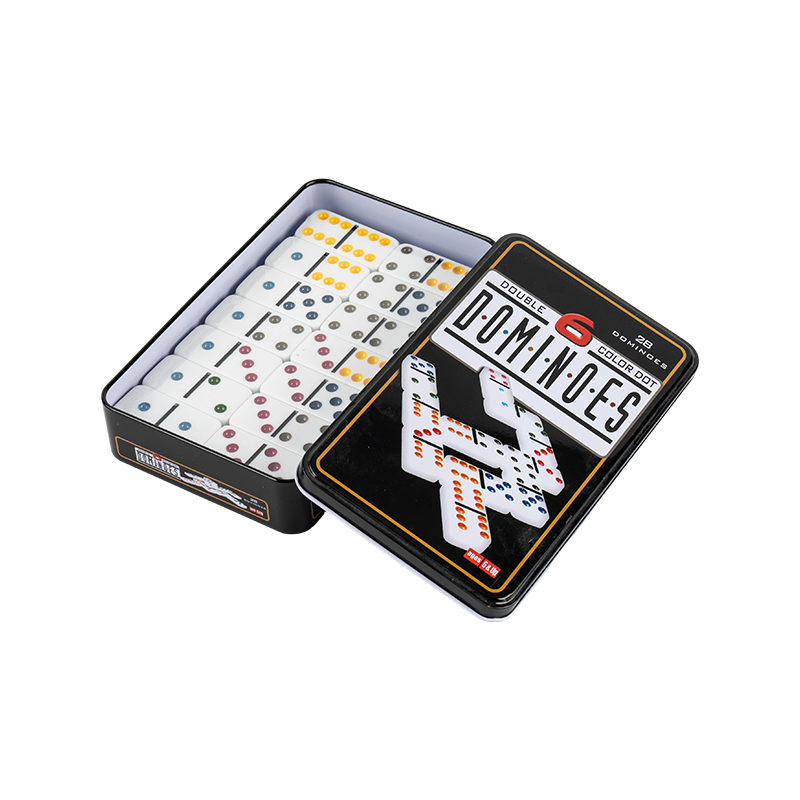 Double-Six Dominoes in Black Iron Storage BoxA 28-tile Double-6 set with high-contrast black tiles and a metal storage box, suited to casual family games and repeated use.View Product →
If you are choosing tiles for a club, a retailer, or a branded set, our customized domino tiles range is a natural place to look. For a first family set, keep the tiles large enough to read comfortably and store them in a box that will survive repeated use.
The player with the highest double usually starts. If no one holds a double, many groups redraw, while others simply start with the highest tile. The first tile is placed face up in the middle of the table. Play then moves clockwise, and each turn follows the same simple rhythm.
Doubles are usually placed crosswise. In the basic game, a double does not create extra open ends unless your group agrees to play “spinners.” That single house rule changes the shape of the line and the pace of the game, so mention it before play. For a focused walkthrough of the Double-6 version, our guide to Double-6 dominoes rules and strategies explains the same flow in more detail.
Most casual disagreements come from mixing draw rules with block rules. In a draw game, players who cannot move take tiles from the boneyard until they can play or the supply runs out. In a block game, there is no drawing; a player who cannot move simply passes. Both versions are common, and both are perfectly fair as long as everyone knows which one is being played.
A round ends when one player places their last tile. If every player is blocked and no one can move, the round ends as a block. Many groups then award the round to the player holding the lowest pip count, while others score the remaining tiles in the usual way. Tiles left undealt are sometimes called sleepers or the boneyard; in most basic games they stay out of play until someone draws them. Keep the boneyard tidy and face down so no one can read the tiles by accident.
Simple scoring is the best starting point. When a player goes out, add up the pips on the tiles still held by the other players. The winner scores that total. In a partnership game, add both partners’ tiles together. If the round is blocked, the player or team with the lowest remaining pip count usually wins the round and scores the opponents’ pips.
Muggins adds a pleasant layer of attention because every tile can change the count at the open ends. It also rewards quick arithmetic. If younger players are at the table, simple block scoring is usually kinder and keeps the game moving.
Double-6 is the familiar family standard, but Double-9 and Double-12 sets support longer lines and regional styles. Cuban-style games often use Double-9 tiles, while Mexican Train is commonly played with Double-12. The larger the set, the more important it is to agree on hand size, the opening tile, and whether every player builds a private line or a shared line.
For Cuban-style play, a sturdy wooden box keeps the larger set organized between games. Our traditional Cuban Double-9 set is one example of that practical approach.
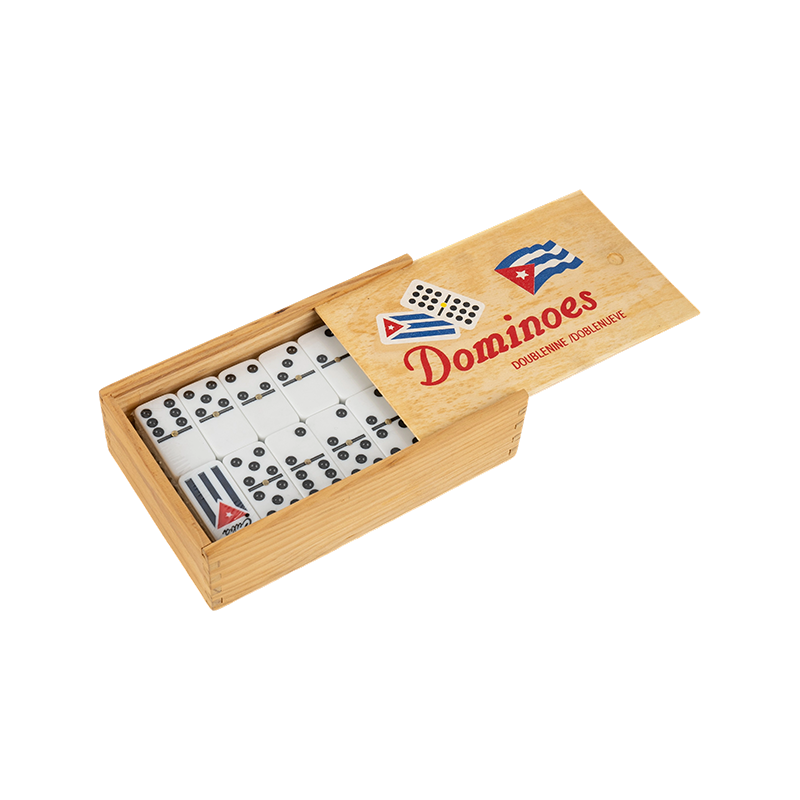 Traditional Cuban Double-Nine Dominoes in Wooden BoxA Cuban-style Double-9 set supplied in a wooden storage box, useful for keeping the larger set organized between games.View Product →
For Mexican Train and other long-line games, a Double-12 set gives the table more room to grow. A labeled aluminum case also makes the set easier to carry to a friend’s house or a club night.
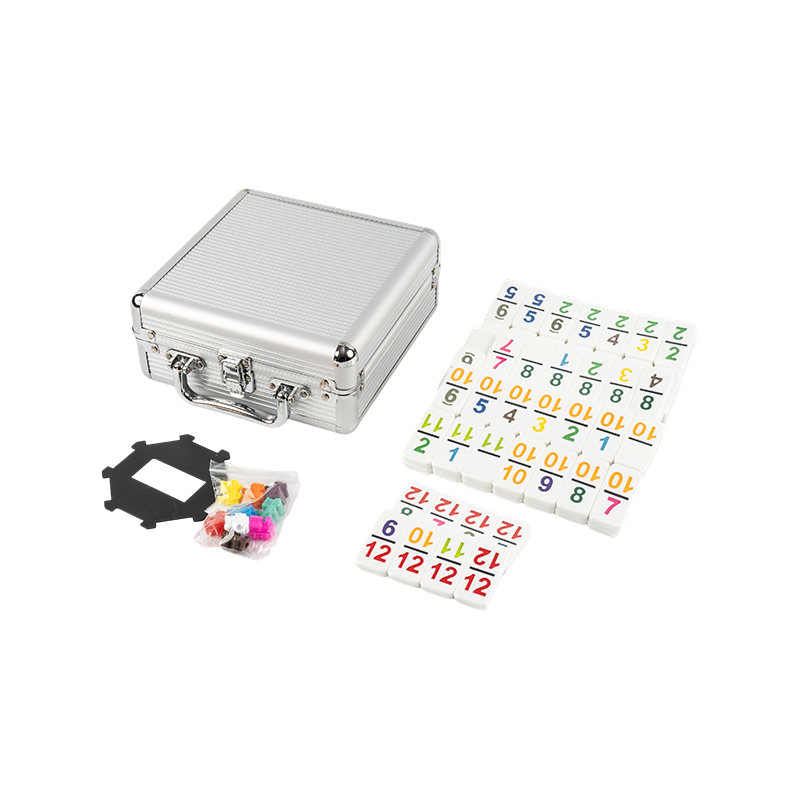 Double-Twelve Mexican Train Dominoes in Aluminum BoxA Double-12 set in an aluminum case for Mexican Train and other long-line games, giving the table more room to grow.View Product →
None of these variations is more “correct” than another. The right version is the one your group enjoys and can explain clearly. If you teach a new player, start with Double-6 and the basic draw game, then add spinners, Muggins scoring, or train rules once the simple turn is comfortable.
At our factory, we pay attention to consistent thickness and smooth edges because a wobbly line is distracting. At the table, the same principle applies: a tidy line, a clear count, and a relaxed approach make the rules easier to remember.
Shuffle face down, deal the agreed number of tiles, and start with the highest double. Match one end, place doubles crosswise, and draw or pass according to the version you are playing. The round ends when someone goes out or the board is blocked, and the winner scores the pips left in the other hands. Everything beyond that is a house rule, a regional variation, or a scoring twist. Learn that skeleton first, and you can enjoy a game of dominoes with almost any set and almost any group.

Mainly engaged in the manufacture and processing of dominoes and their matching dice and plastic products.
Phone:+86-189-5820-5377
Email: [email protected]
TEL:+86-574-8873-4255
Adress: Jindi Village, Jinjiayuan, Jinhu Town, Fenghua City, Ningbo, Zhejiang, China
