
 EN
EN  Deutsch
 Español
Why Rummy Tile Game can become a new generation of classic board game
Introduction: The charm of board games and the rise of Rummy Tile Game Historical background of traditional board games Board games, as part of human...

Few games have traveled as far, or adapted as gracefully, as the classic rummy game. Born as a card game in family parlors and club rooms, it has since taken on a second life as a tile game played on kitchen tables around the world. From our molding floor in the port city of Ningbo, we have spent well over a decade watching this game earn its place in homes across Europe, the Americas, and beyond. In the pages that follow, we walk through how rummy is played, what separates winning players from casual ones, and what goes into a set that stays on the table for years.
Rummy sits at the center of a large family of matching-card games, and every member shares the same core: players draw and discard in turn, arranging their cards into matching combinations called melds. Historians usually point to Conquian, a Mexican game popular in the late nineteenth century, as the earliest recognizable ancestor. From there the idea spread and branched into gin rummy, contract rummy, and dozens of regional variations played from clubs in London to kitchens in Chicago.
Whatever the variant, the appeal stays constant. A newcomer can grasp the rules in a few minutes, yet the game keeps rewarding sharper memory, better timing, and a keener read of the table for years afterward. That rare balance between an easy start and lasting depth explains why rummy has outlived so many trends in tabletop entertainment.
Every form of rummy revolves around melds. A set is three or four cards of the same rank in different suits, such as three sevens spread across hearts, spades, and diamonds. A run is three or more consecutive cards of the same suit, such as the four, five, and six of clubs. Most house rules let an ace sit at either end of a run, though your group should settle that question before the first deal. The table below shows the two meld types side by side, so a new player can spot them at a glance.
| Meld Type | Example | Requirement |
|---|---|---|
| Set | 7 of hearts, 7 of spades, 7 of diamonds | Three or four cards of the same rank, each in a different suit |
| Run | 4, 5, 6, and 7 of clubs | Three or more consecutive cards of the same suit |
| Four-card set | Queen of hearts, spades, diamonds, and clubs | One card of the same rank from each suit |
Once a meld is laid down, it normally stays open for the rest of the round, which invites other players to extend it on their turns.
A standard round keeps the same rhythm whether two people sit down or four:
Notice the tension built into this loop. Every card you draw moves you closer to a meld, and every card you discard tells the table something about your hand. Skilled players play both sides of that exchange.
When someone goes out, the round ends and the cards left in the other hands do the talking. Number cards count at face value, face cards count ten, and aces usually count one unless your table plays them high. The player who went out collects the total of everyone else's unmatched cards, and groups often keep playing to an agreed target across several rounds.
Many circles add a bonus for going rummy, meaning a player goes out in a single turn without ever having laid down an earlier meld. It is a rare, satisfying feat, and those extra points are exactly why experienced players sometimes hold a winning hand a little longer than they need to.
Rules make rummy playable; habits make it winnable. Four of them matter most:
Somewhere along the way, someone asked a simple question: what if rummy did not need cards at all? The answer became the rummy tile game, now a fixture in family cupboards across Europe and North America. A typical set holds 106 tiles: the numbers 1 through 13 in four colors, each number appearing twice, plus two jokers. Players rack their tiles on stands, work toward an initial meld worth at least 30 points, and then keep rearranging the open melds on the table to play more of their hand.
Tiles changed the experience in quiet but important ways. Nothing needs shuffling, young children can read the numbers without knowing card suits, and the open board turns each turn into a small puzzle. If you are curious how this format conquered so many living rooms, our notes on the origin and global expansion of the classic rummy tile game tell that story in detail.
Having produced urea-molded game pieces since 2008, we admit a bias here, but it is a bias earned on the factory floor. Urea resin gives tiles a dense, satisfying weight and a hard, smooth surface that resists scratches far better than lightweight plastic. Edges should arrive polished rather than sharp, the printed or engraved numbers should survive years of shuffling in the bag, and the racks should hold tiles firmly without pinching them. Storage matters too: a sturdy box keeps all 106 pieces together between games.
Your playing habits should shape the set you choose. Families who host regular game nights tend to prefer the full-size format, while players who carry their game on holidays and weekends away appreciate something lighter.
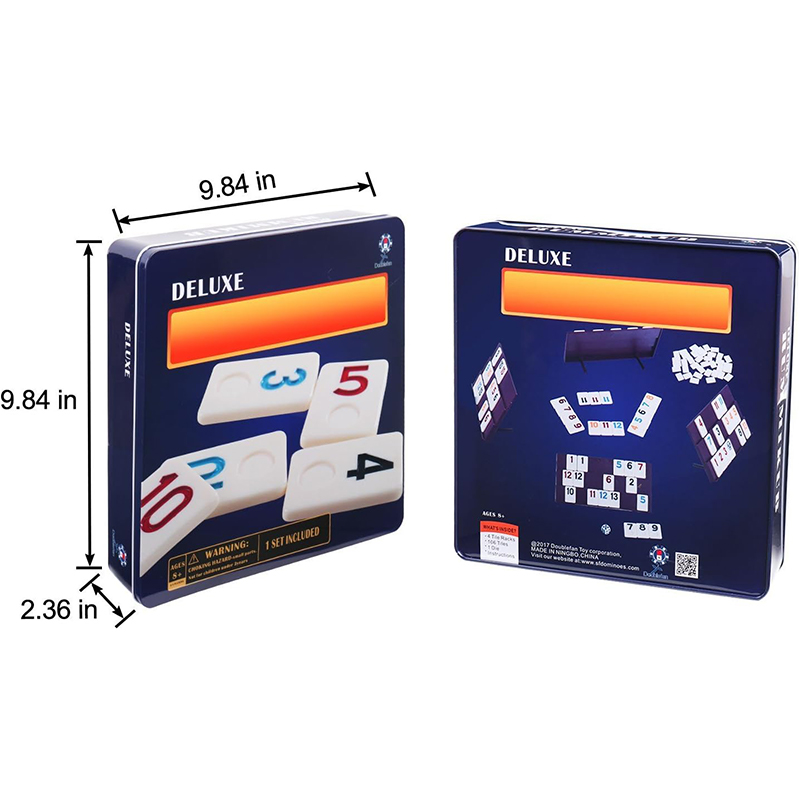 2-4 Player Classic Rummy Tile Game in Iron CaseThis 106-tile rummy set for 2-4 players includes four sturdy racks and a compact iron storage case. Placed here to show a full-size format, it suits families who host regular game nights and want durable, easy-to-store equipment.View Product →
 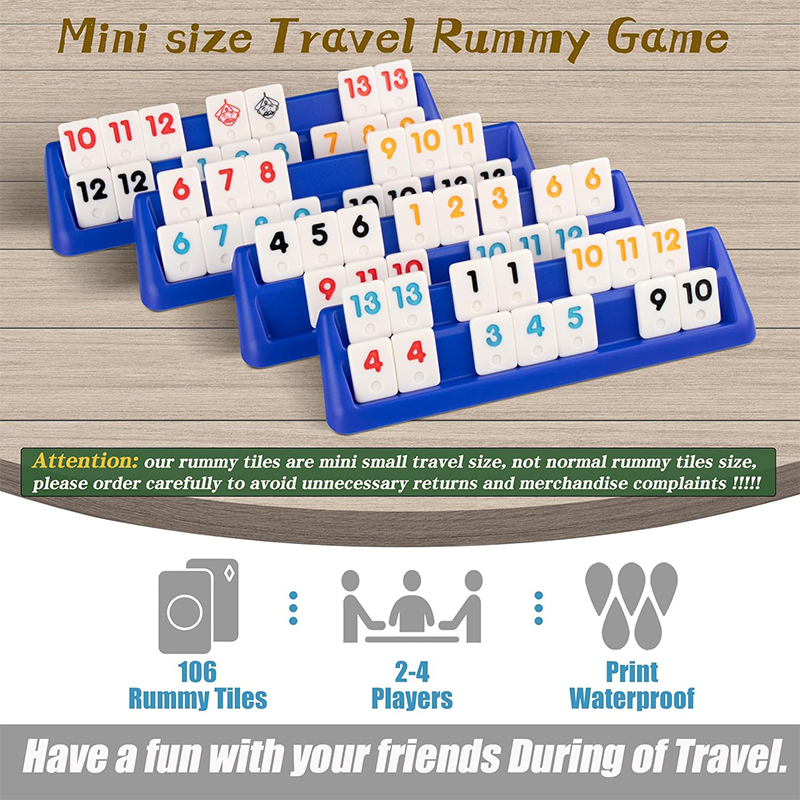 4-Player Portable Travel Rummy Tile Set with Canvas BagWith 106 mini tiles, four lightweight racks, and a canvas storage bag, this compact set keeps classic rummy playable anywhere. It appears here as the lighter option for players who carry their game on holidays and weekend trips.View Product →
Rummy's family tree has some entertaining branches. One of our favorites blends the meld-building of rummy with the hand rankings of poker, giving two classics a shared stage at the same table. It plays quickly, it gives card-game fans a familiar bridge into rummy, and it earns its spot in the cupboard of any household that loves game night.
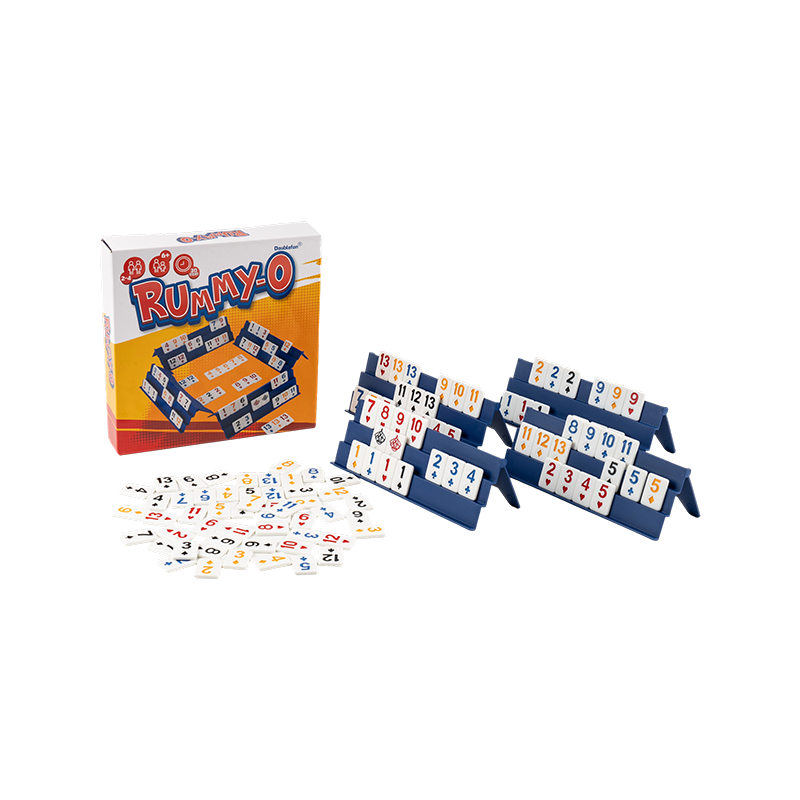 2-4 Player Poker Rummy Card Game SetCombining rummy melds with poker-style card design, this set offers 106 cards, four racks, dice, and a timer. It follows the discussion of rummy variants, showing poker fans a familiar, quick-playing bridge into rummy.View Product →
Whether it is played with a well-worn deck or a box of glossy tiles, rummy rewards the same things: attention, patience, and good company. For retailers, brands, and importers who want to put a dependable rummy set in front of their customers, you are welcome to explore our full range of tabletop game sets and request a quote. Our team in Ningbo will be glad to help, from standard orders to fully customized designs.

Mainly engaged in the manufacture and processing of dominoes and their matching dice and plastic products.
Phone:+86-189-5820-5377
Email: [email protected]
TEL:+86-574-8873-4255
Adress: Jindi Village, Jinjiayuan, Jinhu Town, Fenghua City, Ningbo, Zhejiang, China
